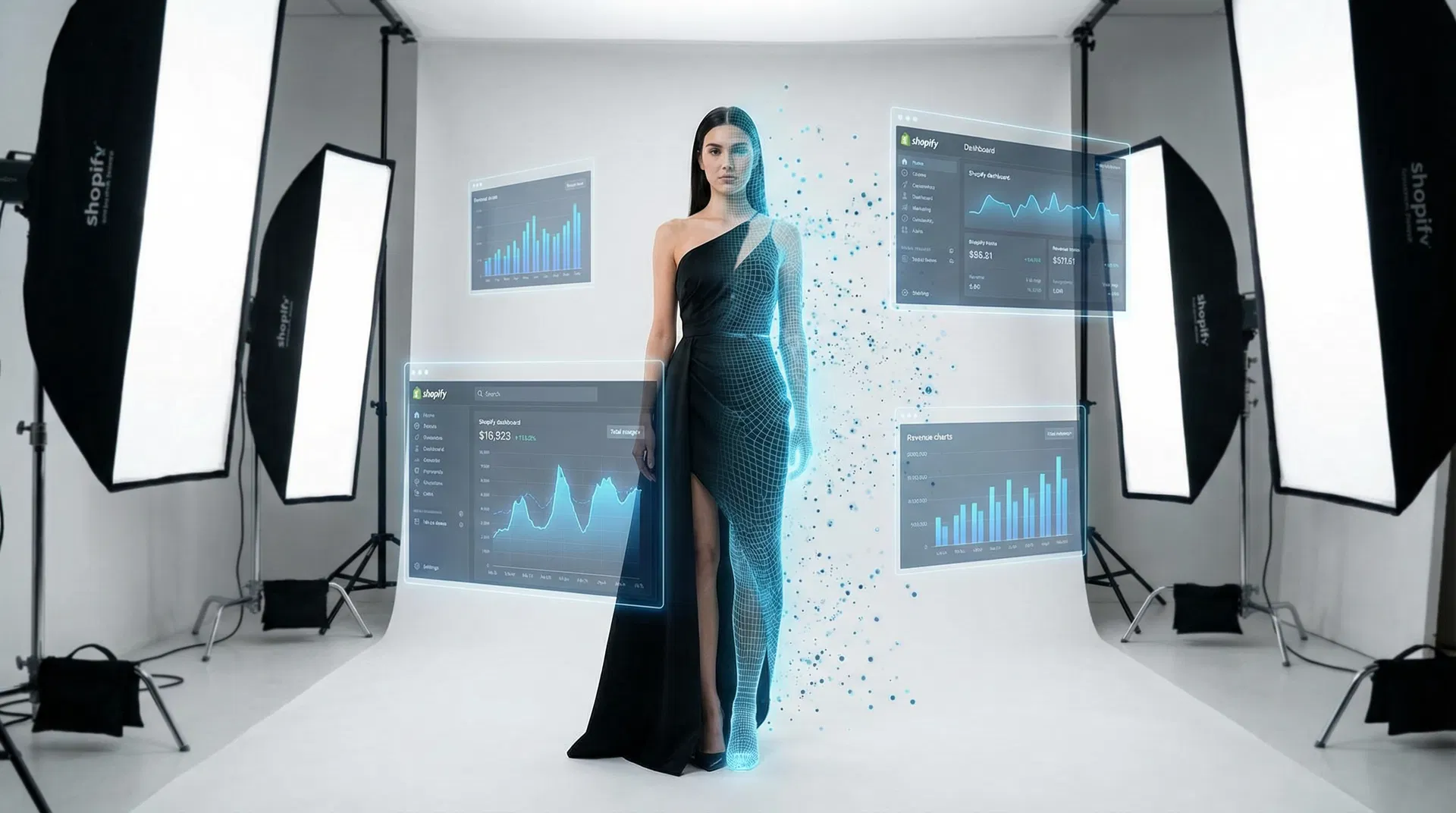
A new category of Shopify store operator has emerged over the past year, one that runs a fashion brand without ever booking a photographer, hiring a model, or renting a studio. The entire visual catalog — every product shot, every lifestyle image, every social media asset — is generated by artificial intelligence.
The trend has gained significant traction in the e-commerce community. Multiple Shopify apps now specialize in AI fashion model generation, including SellerPic, Lensia, Modelia, Picjam, and OnModel.ai. Each allows store owners to upload flat-lay or mannequin images of their clothing and receive back professional-quality photos of AI-generated models wearing the garments in various poses and settings.
The economics behind this shift are striking. According to data compiled by Couture.ai, a traditional product photoshoot costs between $55 and $160 per image when factoring in studio rental ($250–$700 per day), photographer fees ($600–$3,000 per day), model fees ($300–$1,500 per day), and post-production ($25–$100 per image). AI-generated product images, by contrast, cost between $1.50 and $6.00 per image, with monthly platform subscriptions ranging from $79 to $299.
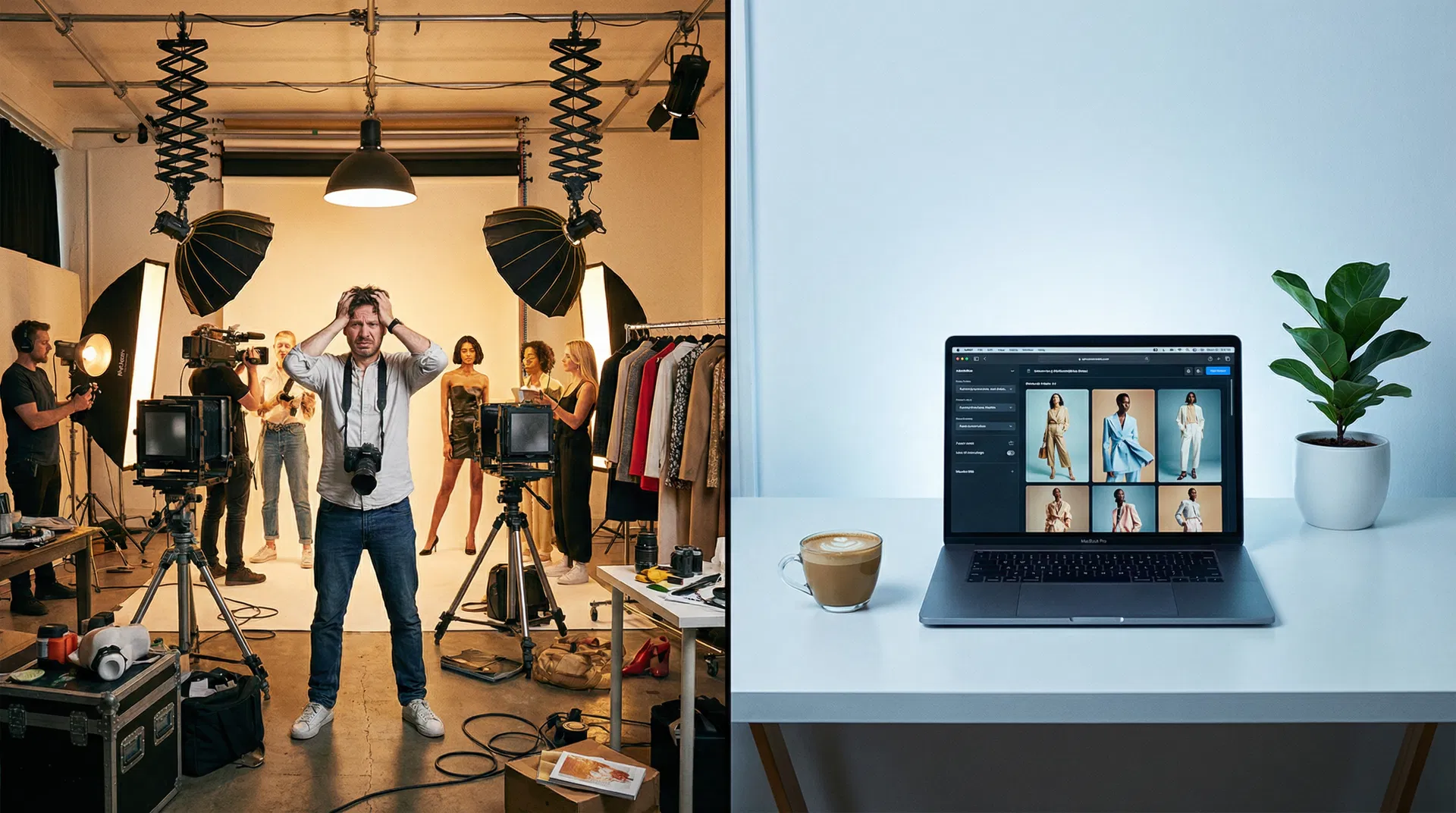
For a store producing 50 or more product images per month, the cost difference becomes substantial. A 2025 industry report found that 76 percent of small businesses using AI product photography tools reduced their visual content production costs by more than 80 percent, largely by eliminating studio rental, photographer fees, and post-shoot logistics.
The speed advantage is equally significant. Traditional photography requires two to three weeks from concept to final delivery. AI tools can generate comparable imagery in hours. For operators running seasonal campaigns or responding to fast-moving trends, this compression of the production timeline represents a meaningful competitive advantage.
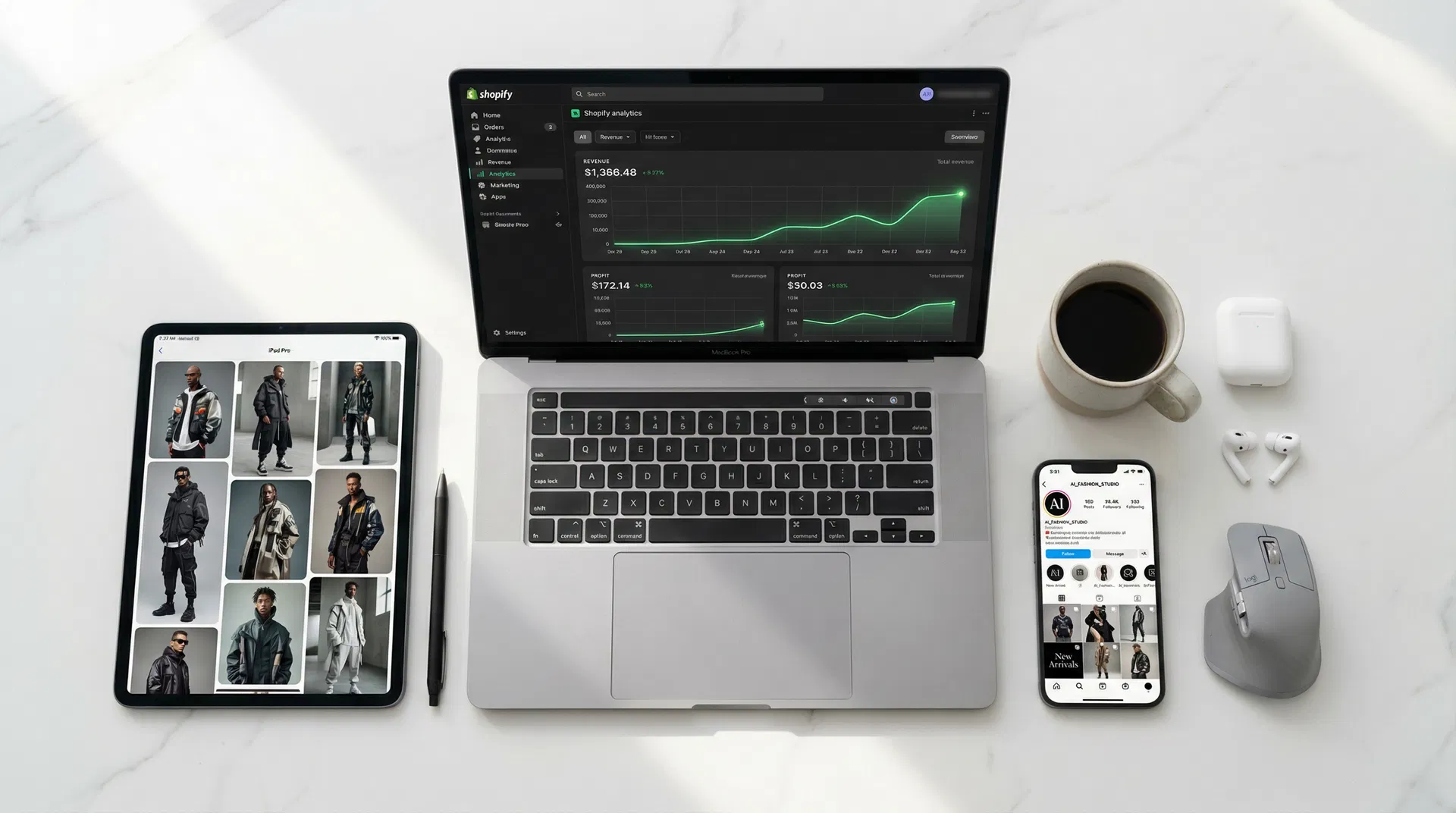
The quality question — whether AI-generated fashion photography can match traditional studio work — appears to be resolving in favor of the technology. Multiple Shopify app developers report that their AI outputs now achieve conversion rates comparable to traditional photography. Some operators have reported running A/B tests between AI-generated and traditionally photographed product pages and finding no statistically significant difference in purchase rates.
Several content creators in the e-commerce space have documented their use of these tools publicly. The Instagram account @ecomtobill, which has accumulated significant engagement around AI dropshipping content, represents one example of the growing community of operators building fashion brands with AI-generated visuals on Shopify.
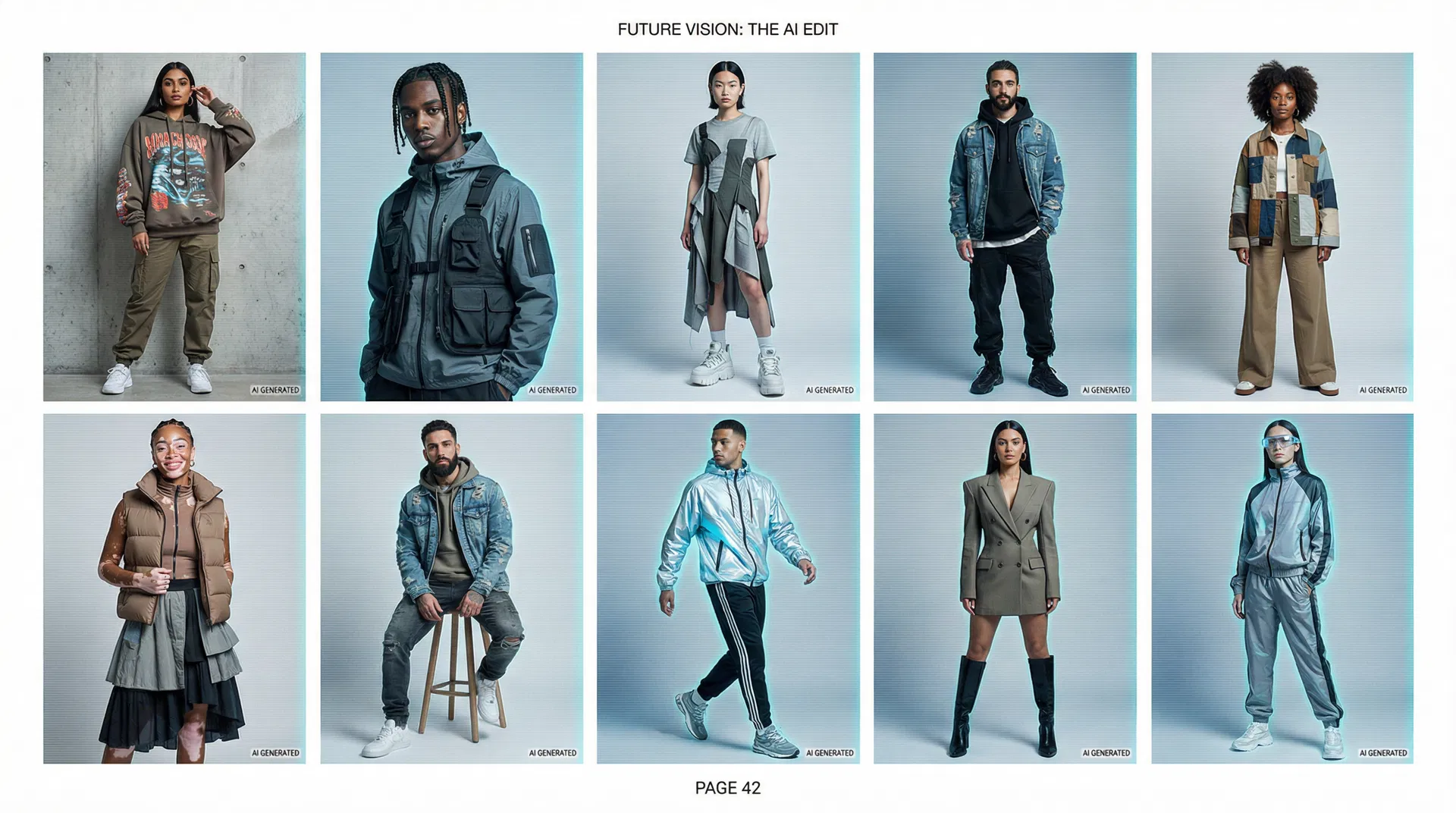
The broader context adds weight to the trend. Shopify reported record revenue exceeding $3 billion for Q4 2025 and projected approximately 30 percent revenue growth for Q1 2026, with AI-driven commerce cited as a key growth driver. More than 85 percent of e-commerce businesses have reported some form of AI adoption, with over 58 percent specifically using AI to optimize product imagery and video content.
The tools themselves continue to evolve. Recent updates from several platforms have added video generation capabilities — allowing operators to create AI-generated fashion videos from a single flat-lay image. Others have introduced virtual try-on features, outfit combination tools, and the ability to change a model's pose or background in seconds.
Critics of the approach raise valid concerns. Questions about disclosure — whether consumers should be informed that product images feature AI-generated models — remain largely unresolved from a regulatory standpoint. There are also concerns about the long-term impact on professional photographers and models whose work is being automated.
Nonetheless, the economic logic is difficult to argue with. For a solo operator launching a fashion brand on Shopify, the choice between spending thousands on a traditional photoshoot and spending under $300 on an AI platform that generates unlimited variations is increasingly straightforward. The technology has crossed the threshold from novelty to practical business tool.